Bookings no longer arrive through a single channel
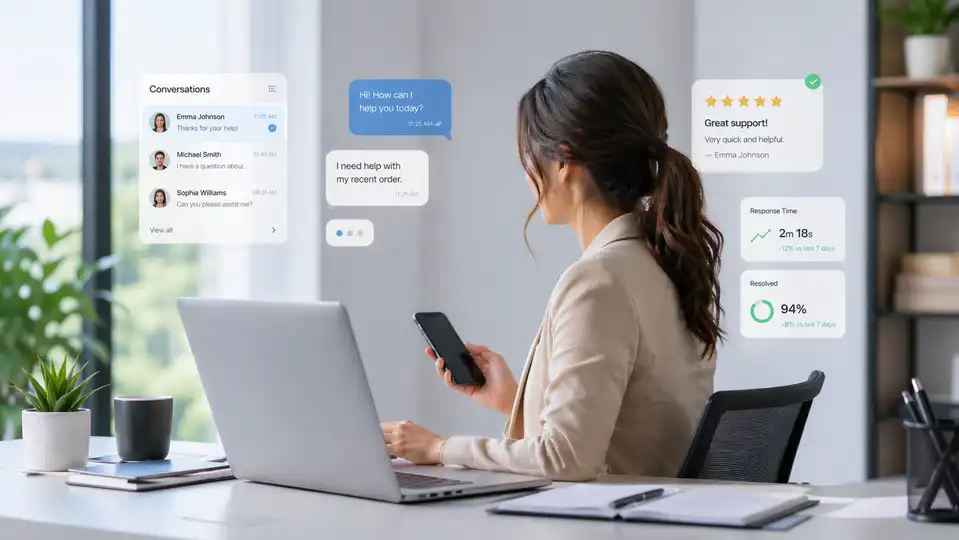
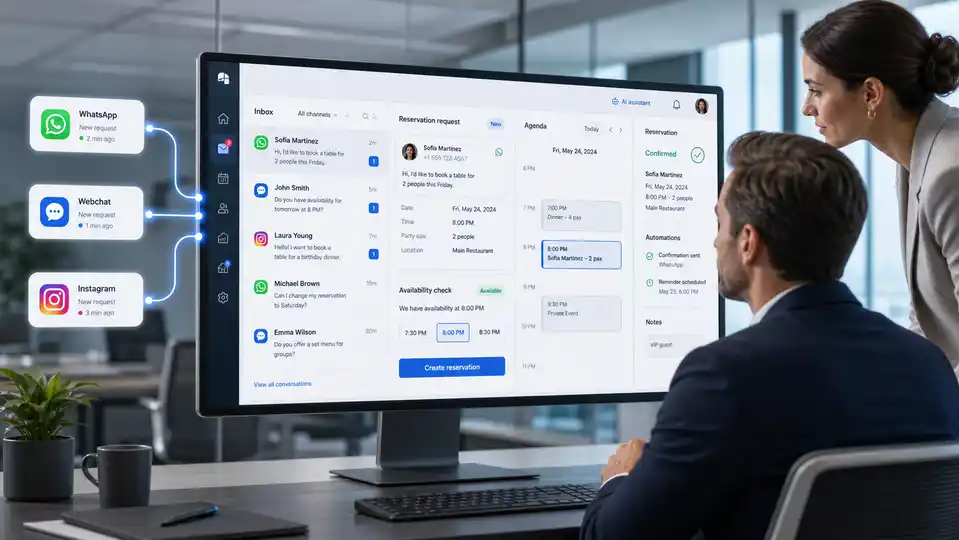
For many businesses, managing bookings seems simple until requests start arriving from everywhere. One customer writes on WhatsApp, another asks through the website chat, someone replies to an Instagram story, and another person sends an email to change an appointment that was already confirmed.
The challenge is not only replying quickly. The real challenge is understanding what the customer wants to book, checking availability, asking for missing details, confirming without mistakes, and keeping everything recorded so the team does not have to reconstruct the conversation later.
That is where artificial intelligence can create real value. Not as a bot that replies with isolated messages, but as an operational layer that turns a conversation into a clear, validated and traceable booking.
Automating bookings is not about replacing human service. It is about preventing every appointment from depending on memory, scattered messages and manual checks.
The problem is not WhatsApp: it is the lack of order
WhatsApp is often the most convenient channel for customers, but it is not always the easiest channel for the business to manage. When bookings are handled through scattered conversations, common issues appear quickly: pending messages, changes that are not recorded, duplicated slots, customers writing outside business hours or bookings confirmed without properly checking availability.
The same happens across other channels. Web chat can capture someone who is visiting the website. Instagram can receive quick questions after a post or story. Email can be useful for confirmations or more formal changes. Each channel has value, but if all of them operate separately, the team ends up working with an incomplete view.
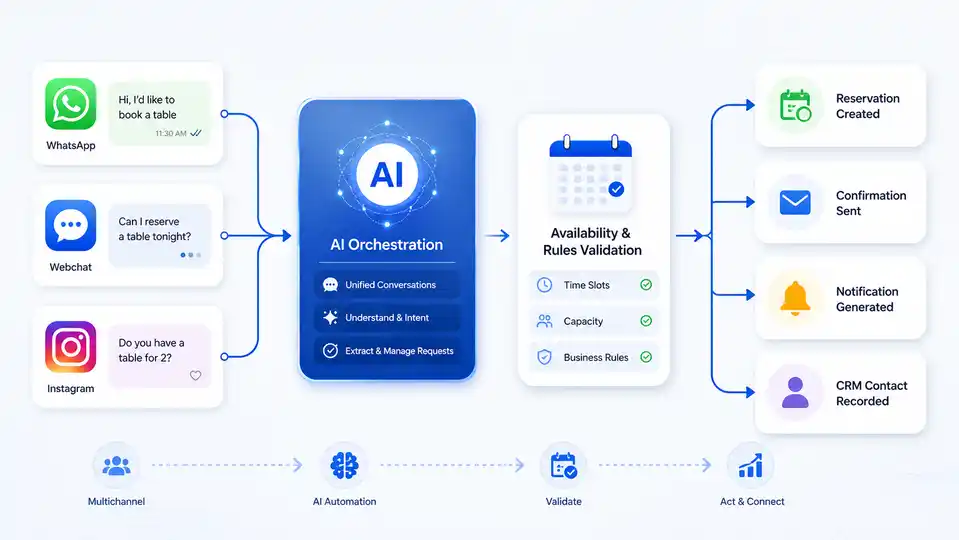
That is why the goal should not be to automate WhatsApp alone. The goal should be to centralize booking requests from different channels and manage them with the same logic: availability, business rules, confirmations, notifications, history and follow-up.
In a solution like Nexional, the conversation is not treated as an isolated message. It is connected to the customer context, the source channel and the booking status so the business can stay in control as volume grows.
What good booking automation should do
Useful booking automation should not simply answer “yes” or “no”. It should support the full process.
First, it must understand the customer’s intent. Asking about opening hours is not the same as trying to book, modify an appointment, cancel or check an existing reservation.
Then, it should collect only the necessary details. If the customer has already mentioned the date and time, there is no need to ask for them again. If the number of people, service, professional or preferred time slot is missing, the AI should ask naturally.
It must also check availability before confirming. This part is essential: a booking should not be closed unless opening hours, service duration, available resources, capacity, holidays, breaks or any configured business rule have been respected.
Finally, it should register the booking and communicate it clearly. The customer needs a clear confirmation, and the team needs to see what was created, through which channel, with which details and in what status.
Bookings, notifications and reminders
A booking does not end when it is created. Many issues appear afterwards: the customer forgets, wants to change the time, is unsure whether the booking was confirmed or writes again through another channel.
That is why notifications are an important part of the experience. When a booking is created correctly, the system can send a confirmation to the customer and notify the team internally. It can also prepare reminders, follow-up messages or alerts when relevant changes happen.
This reduces friction in both directions. For the customer, the experience is clearer. For the business, the schedule no longer depends on manually reviewing every conversation.
The key is that notifications must be connected to the actual booking. Sending automatic messages is not enough if changes are not recorded or if the team does not know what happened.
The contact is created automatically and the history stays connected
One of the most important advantages of organizing bookings with AI is that each conversation can enrich the customer history.
When a person writes to book, Nexional can create or update their contact inside the platform’s lightweight CRM. This means the business does not only see a booking, but also who requested it, which channel it came from, what was answered and which interactions happened before.
This is especially useful when the customer writes again. The team does not start from zero. It can see whether that person booked before, whether there was a change, whether something is pending confirmation or whether the conversation should be passed to a person.
In businesses with many appointments, this context prevents information loss and improves continuity. The customer does not have to repeat everything, and the team works with more confidence.
Integrations and exports: when the booking should not stay locked inside one tool
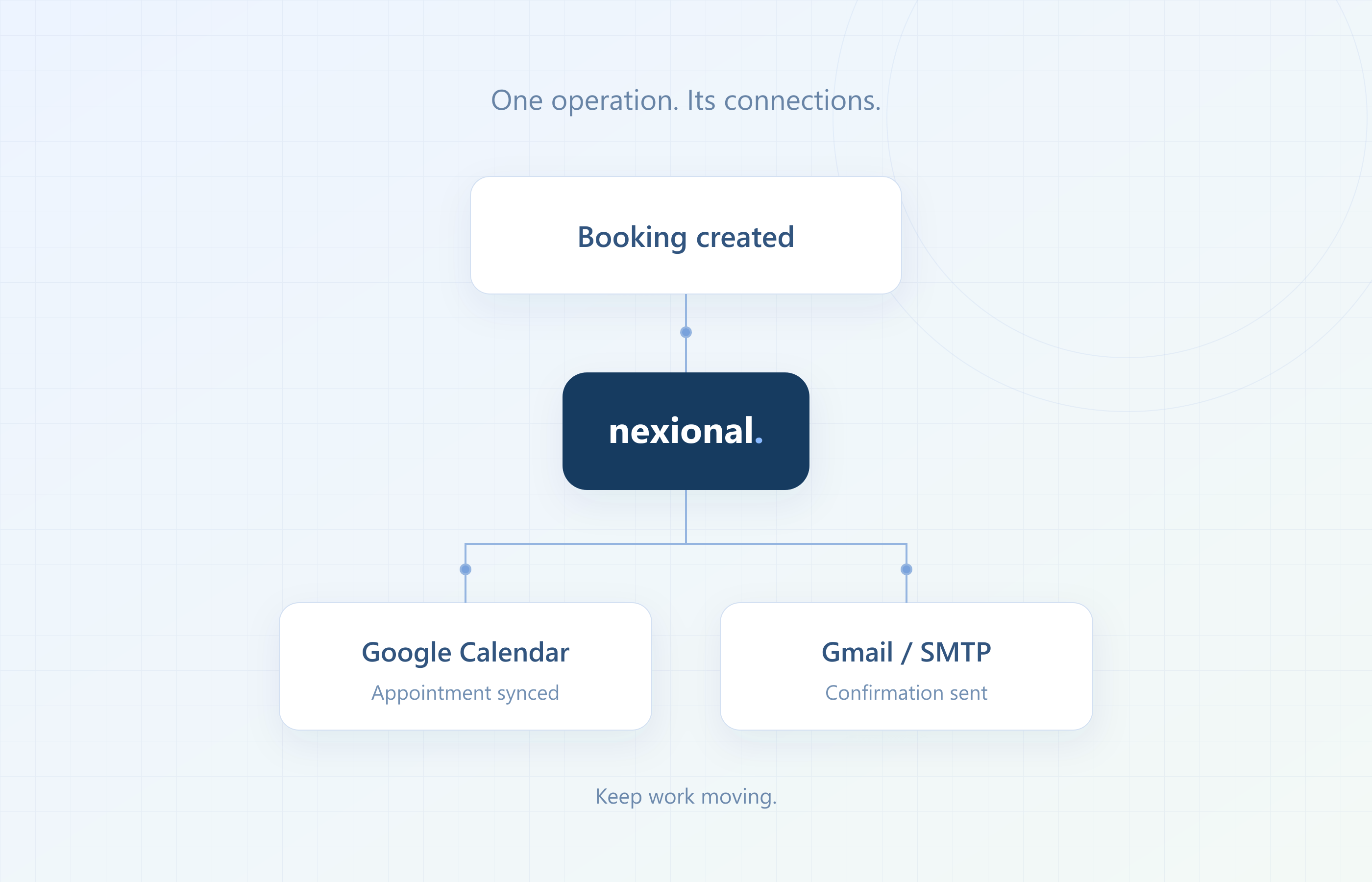
Every business has its own way of working. Some need to send bookings to an internal calendar. Others want to export them to CSV, review them in Google Sheets, connect them with Google Calendar or share reports with the team.
That is why good automation should not behave like a closed box. A booking should be able to integrate with other systems or, at minimum, be exported easily so it can be analyzed, reviewed or moved into the company’s internal processes.
In Nexional, this fits a clear idea: the conversation is the entry point, but the operation continues afterwards. A booking can become a record, a notification, a calendar update, a data point for analytics or an export for the team.
This helps the business avoid copying and pasting information between tools or maintaining parallel schedules that eventually become outdated.
Booking analytics: data that helps businesses decide better
Automating bookings also makes measurement easier. And measuring properly is one of the fastest ways to improve operations.
A business can analyze how many bookings it receives, which days have the highest demand, which time slots work best, which channels generate more requests, how many conversations end in a booking, which changes are most common or how many cancellations occur.
These data points are not just nice to display in a dashboard. They support practical decisions: reinforcing specific time slots, adjusting availability, detecting peak hours, improving confirmation messages, reviewing high-demand services or understanding which channel is generating the most activity.
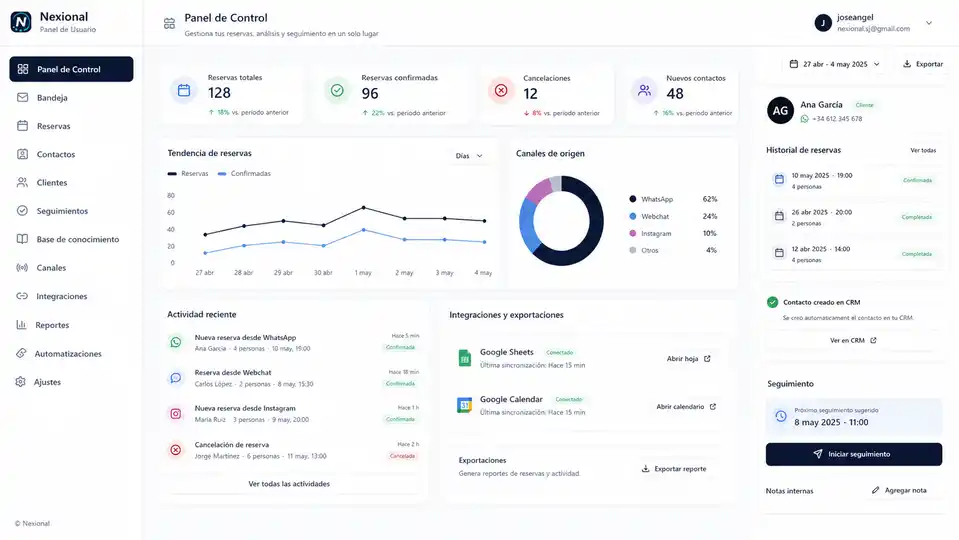
For an SME, these metrics can make an important difference. A large structure is not required to start working with data. It is enough for each booking to be properly recorded and connected to its channel, date, status and contact.
When a person should step in
AI can handle many parts of the process, but it should not force every booking to the end.
There are situations where the human team should take over: an exception outside normal hours, a sensitive request, a complaint, a complex booking, an upset customer, an availability conflict or a decision that requires commercial judgement.
In those cases, automation does not disappear; it prepares the human work better. It collects the context, summarizes the conversation and allows the team to step in knowing what the customer requested and what has already been attempted.
A good experience does not depend on everything being automatic. It depends on automation and human service working with continuity.
How Nexional solves it
Nexional is designed so bookings do not live separately from customer service.
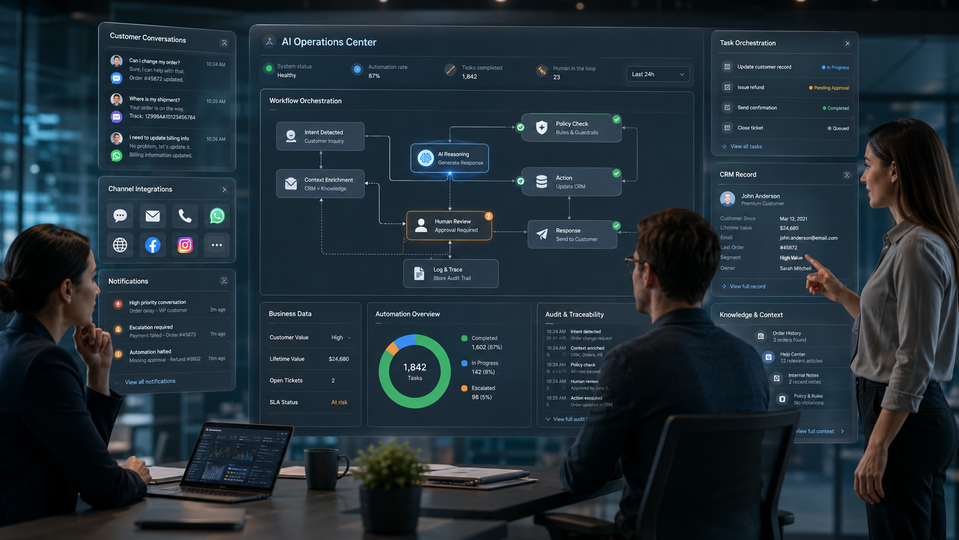
The business can receive requests from WhatsApp, web chat, Instagram or other connected channels; centralize them in a unified inbox; use AI to understand customer intent; validate required details; register the booking; create or update the contact; send notifications; and review analytics to understand activity better.
The value is not in replying to more messages automatically. It is in turning each booking conversation into an organized process: with context, availability, traceability and human control when needed.
This allows the business to respond faster without losing quality, reduce manual errors and work with a clearer schedule.
Conclusion
Bookings no longer arrive through a single channel, and customers do not always follow a perfect format. They write naturally: asking, changing, hesitating, confirming and contacting the business again from whichever channel is most convenient.
That is why AI booking automation should not be limited to placing a bot on WhatsApp. The real opportunity is to connect channels, availability, CRM, notifications, integrations and analytics in a simple operational flow.
At that point, Nexional helps make each booking clearer for the customer and easier for the business to control. Because managing bookings better is not only about filling the schedule; it is about working with less disorder and better information.